
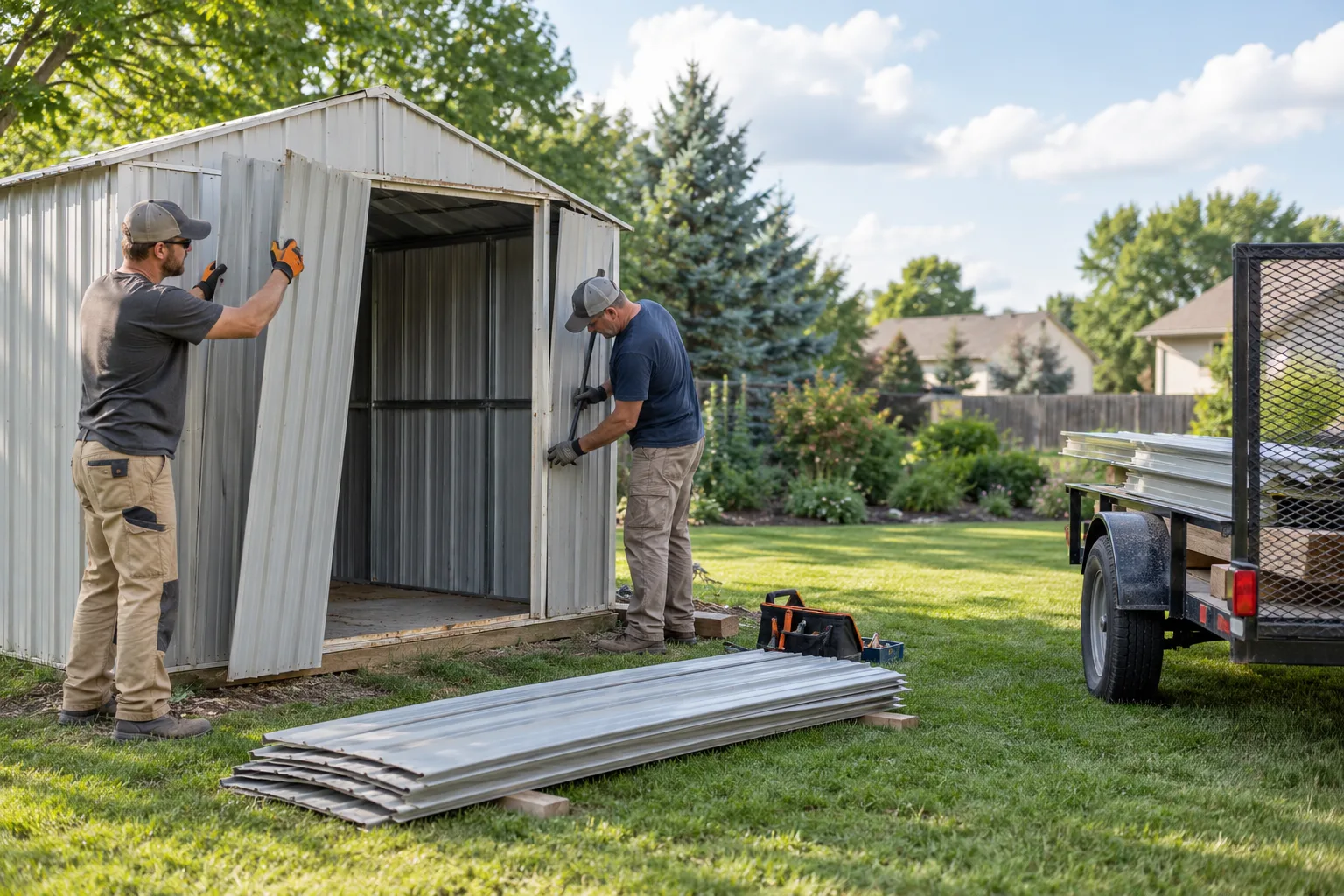
The condition of the fasteners often matters more than the color or brand of a metal shed. Rusted screws, bent panels, and hidden anchors change how the structure can be separated.
Fasteners reveal the likely sequence
Newer panels with visible screws may come apart in larger sections. Corroded fasteners may strip, snap, or hold panels unevenly. Do not test them by pulling on loose walls. Photograph corner joints, roof edges, the doorway, and the base instead.
Rust changes handling
Surface rust and deep corrosion are different. Thin, corroded panels can flex and create sharp edges. Keep children and pets away, and do not stack loose panels where wind can move them.
Four photos that help
- A full view from the door side
- The rear and one side wall
- The roof-to-wall connection
- The base, anchors, and path to the driveway
Check the base before assuming it lifts
Metal sheds may sit on wood platforms, pavers, skids, blocks, or concrete. Anchors may pass through the frame. The base affects both disassembly and what remains afterward, so include it in the estimate request.
Leave enough working room
A panel needs space to be controlled as it comes free. Dense shrubs, fences, and stored materials can remove that room. Clearing ordinary loose items before arrival helps, but do not enter or push against an unstable shed.
See the full metal shed removal scope for inclusions and estimate factors. Good photos of connections are more valuable than a guess at the shed’s weight.