
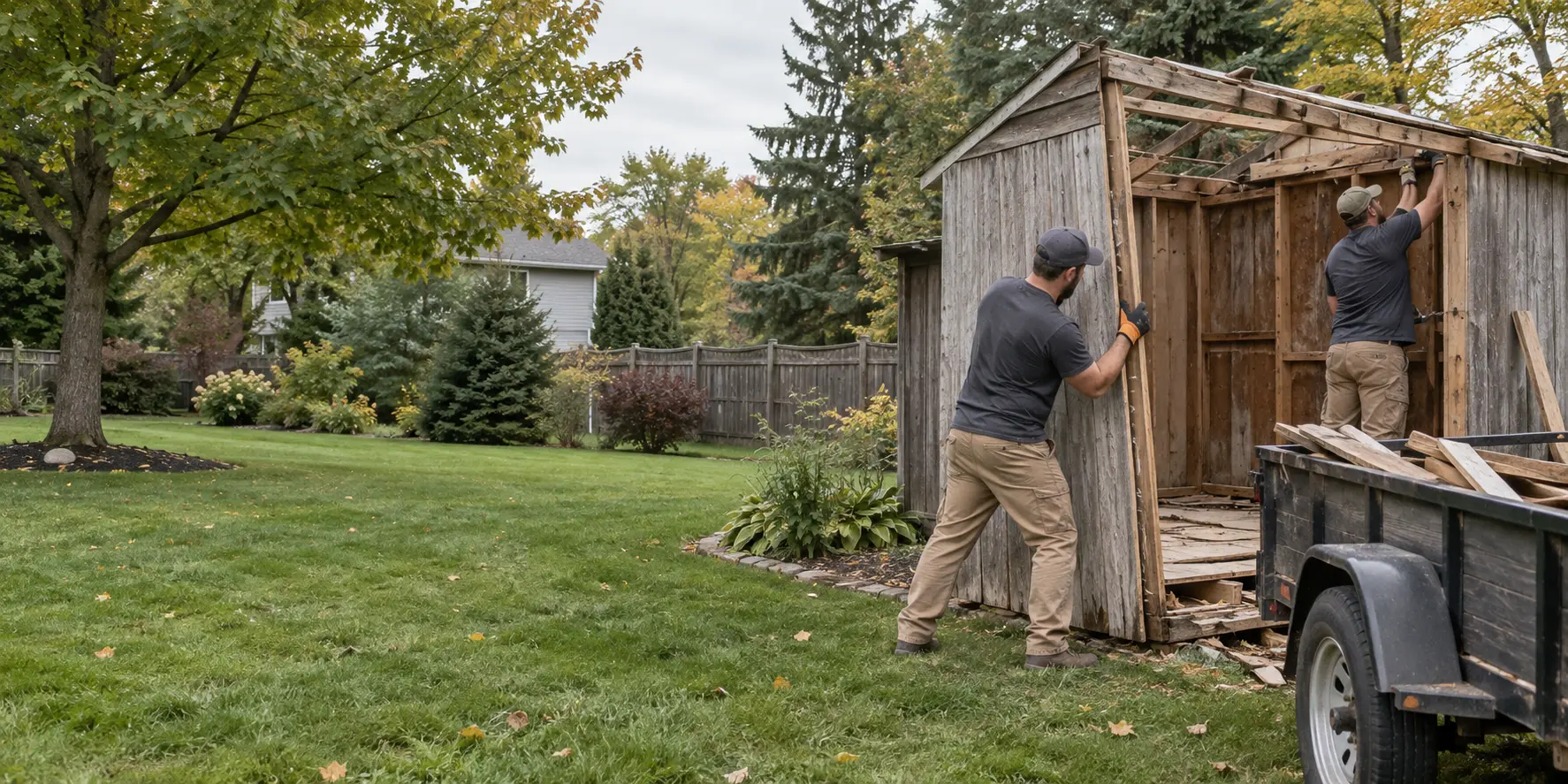
Before a shed comes down, confirm what runs into it, what is stored inside it, and what holds it up. That short review prevents the most expensive surprises.
Start outside the structure
Walk around the shed without leaning on damaged walls or stepping beneath a failing roof. Look for overhead wires, conduit, extension cords, gas cylinders, buried lines, and branches touching the roof. If the building shifts, stop and keep people away until the condition can be assessed.
Use a four-part utility check
- Power: identify hardwired service, outlets, lights, or buried cable. Do not assume an unused switch means the circuit is dead.
- Fuel: remove lawn equipment and identify gasoline, propane, kerosene, and batteries.
- Water: look for hose bibs, irrigation controls, and pipes near the base.
- Unknown materials: flag old insulation, unusual roofing, painted panels, or crumbling board for review.
Questions to answer before the estimate
- Has a qualified person disconnected every utility?
- Can all four sides be reached safely?
- Is the roof sagging or are walls leaning?
- What is under the floor: skids, blocks, piers, or concrete?
- Which contents stay, and which are part of the removal?
Plan the boundary, not only the building
Fences, trees, retaining walls, windows, and air-conditioning equipment can narrow the safe work area. Measure the gate and photograph the entire route to the driveway. A small shed can still be a long carry when it sits behind a house with no direct access.
Keep hazardous items out of the debris pile
Paint, solvents, pesticides, fuel, pressurized cylinders, and suspected asbestos need separate handling. Do not bury them under wood or metal. Tell the estimator what is present so the job can be scoped honestly.
Once those facts are clear, the teardown sequence, crew access, and debris plan are much easier to define. Review the shed demolition service or call for an estimate.